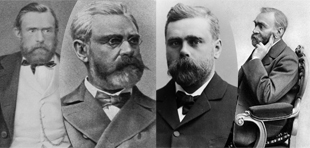
People know Alfred Nobel, inventor and Nobel Prize founder. But his father Immanuel and brothers Ludvig and Robert were equally ingenious – working primarily in tsarist-Russia. Ludvig grew the family’s mechanical workshop to Russia’s leading machine factory. Robert founded Branobel, one of the world’s largest oil companies. Learn their story, from the 1880s until the Russian revolution. Read more »
>> Researchers: free database of digitzed documents from Azerbaidzjan and Georgia. Free use.
>> Do you have a Nobel story to share or tips on the Branobel history? Let us know »
A year in the history
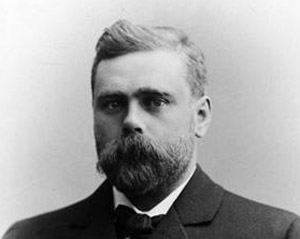 1881: Ludvig’s son, Emanuel, is put in charge of Branobel’s finances. View full Branobel timeline »
Video: Who were they?
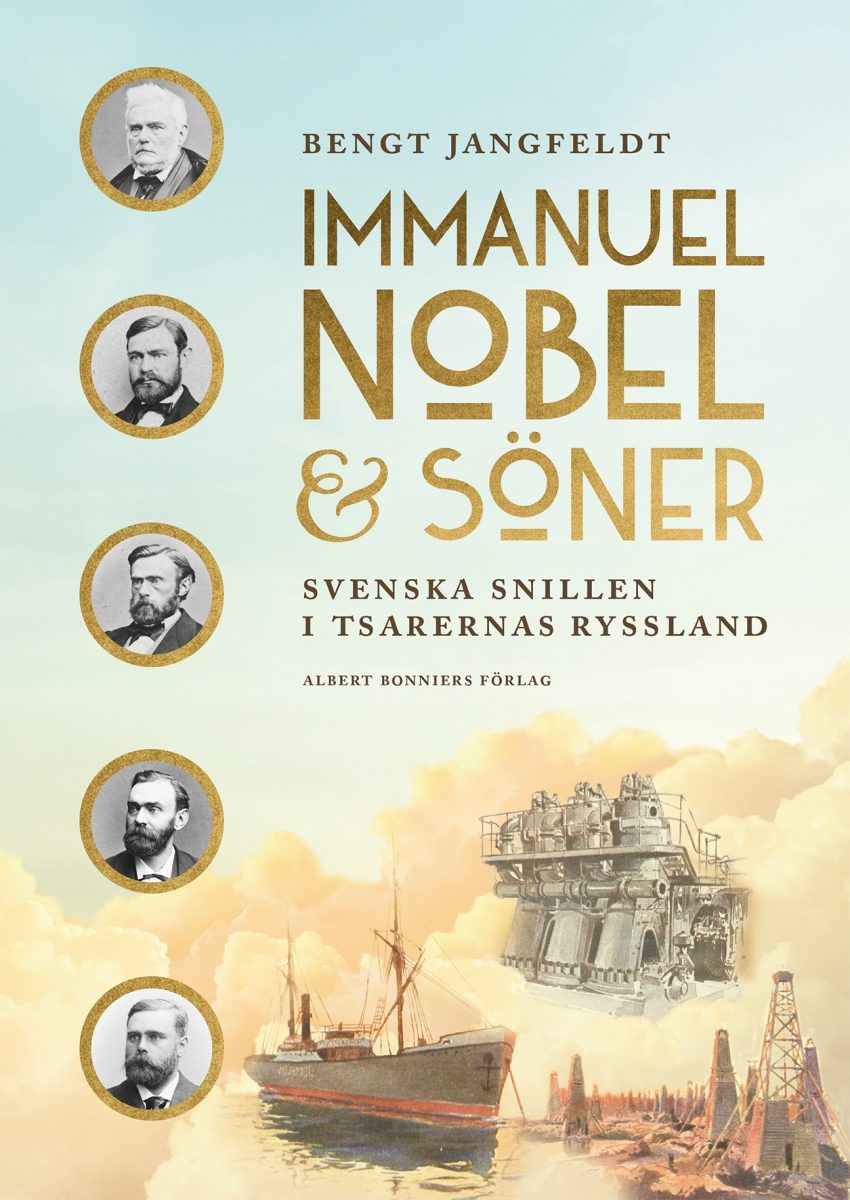 Bengt Jangfeldt, author of the book ”Immanuel Nobel & Sons”, talks about the family. (In Swedish.) View the film »

Read more about:
-
The Branobel company
Branobel got off to a flying start and continued to develop throughout its operation. The technical and organisational competence that was built up made the company a leading actor on the world market.
-
The Nobel Brothers
The three brothers Robert, Ludvig and Alfred Nobel were among the most successful Swedish businessmen of their generation. Robert and Ludvig, and their sons, built up one of Russia’s most important companies, but through the vagaries of history they have undeservedly fallen into oblivion.
-
Employees
Branobel applied many of the most modern social innovations of the time. There were welfare institutions that regulated working hours, staff accommodation and some health care for the staff. The operation was also characterised by the lack of skilled staff in Russia.
-
Places
In just 10 years, Branobel became a global actor in the rapidly expanding oil market. But a global company is also local. The business is always found in some physical place that is important to the people who work there.
-
Distribution
Branobel created and developed an integrated distribution system for its products, from the refineries via railway and tankers to depots and the retail trade. New technology was developed to find markets for residual products, as were fixed routines for deliveries and payments.
-
Production
With their experiences and resources from the mechanical factory in St Petersburg, the Nobel brothers introduced new technology for extracting and refining oil. By organising the whole activity as one continuous system they were able to increase production while also reducing costs.
-
Innovations
Branobel had well-developed systems thinking from the beginning. Production and distribution were managed as a whole. This made it possible to identify and resolve bottlenecks with the help of new technology. The first tanker and the railway transport across the whole Russian Empire are important examples.
-
Society
For a company like Branobel, the infrastructure of society is crucial. The new legislation on exploration permits in 1873 created completely new conditions for commercial oil extraction. The building of the extensive Trans-Siberian Railway is another example.